
Quick answer: choose a scissor lift when the work is directly above where the machine can sit and you want a larger platform for people, tools and materials. Choose a boom lift when the platform has to reach up and across, over an obstacle, or to a point the machine cannot park beneath. If access to the work area is very tight, a vertical mast lift is worth comparing as a third option.
Where the machine can stand
Both machines lift people to height safely, but they solve different problems. A scissor lift is a rising platform: it goes straight up, carries more, and gives you room to work. A boom lift is a positioning tool: it places a smaller basket exactly where you need it, including out and over things. So the first question is not how high the work is. It is where the machine can stand relative to the work.
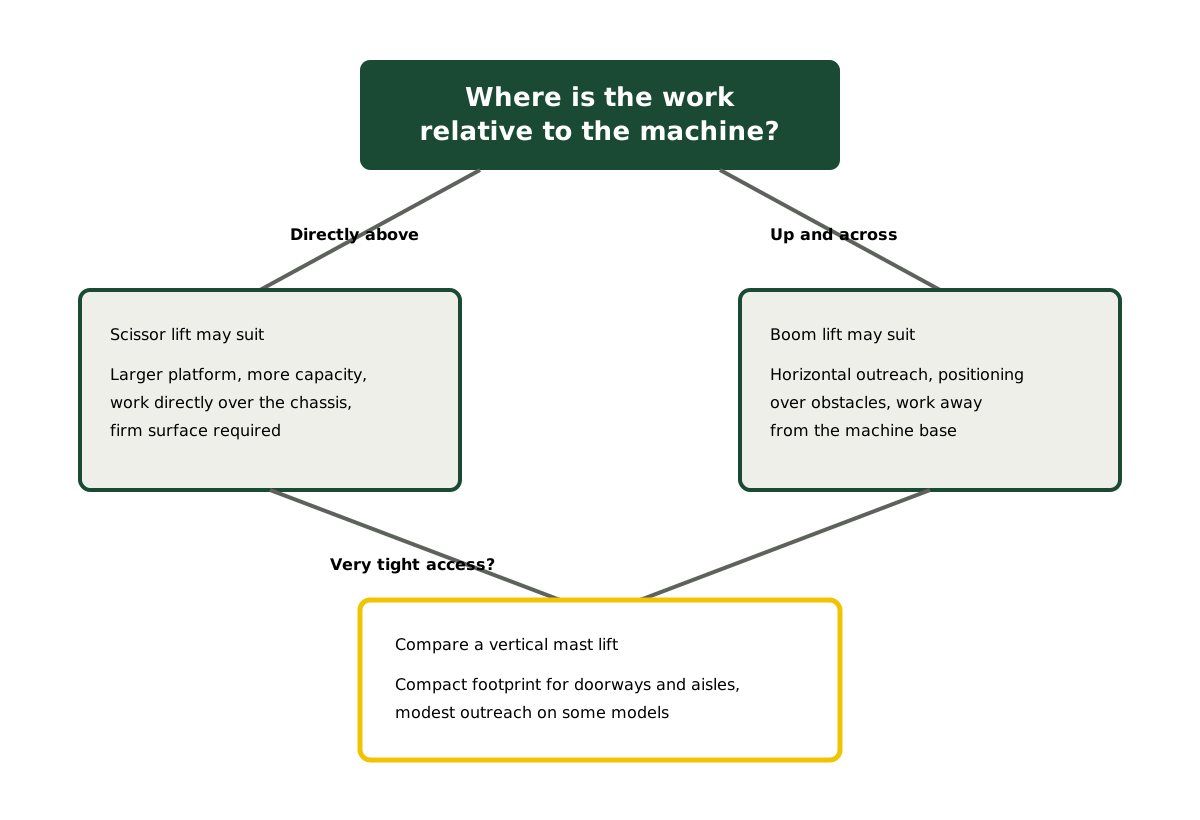
- The machine can park under the work point on firm, level ground or a slab: a scissor lift, sized by working height. Ceiling work, services, painting or cladding directly overhead; long runs at a consistent height, moving the machine along as you go; jobs where two people plus tools and materials go up together.
- The machine cannot park under the work point because of a roof edge, awning, racking, plant, landscaping, a ground-floor structure or an exclusion zone: a boom lift, sized by the working envelope at the outreach you need. Single work points at height that need precise positioning; facade work where the base of the wall is obstructed.
- The route to the work point is the problem rather than the work point itself: compare a vertical mast lift or a narrow scissor before either.
Compare capacity and reach with real examples
The headline height figures on the two machine types are not comparable on their own. A boom lift’s usable height reduces as the boom extends outward, following the manufacturer’s working envelope. Our LGMG AR11J knuckle boom, for example, is listed at 12.75 m working height and 6.78 m outreach, but those are independent maxima: at full outreach the basket is lower than 12.75 m, and at full height the outreach is less than 6.78 m. If you need 5 metres of outreach at 10 metres of height, check the envelope diagram, not the two maximum figures. How to read a boom lift reach chart walks through it. A scissor lift has effectively no outreach: if the machine cannot sit under the work, it is the wrong tool no matter how tall it is. Working height vs platform height explains how the height figures themselves are measured.
Capacity runs the other way. A scissor platform is typically two to four times the deck area of a boom basket and many include an extension deck: the LGMG SC0610EL-2 tracked scissor carries 250 kg including 120 kg on its extension deck, with two people indoors. A boom basket usually carries one or two people with hand tools: the AR11J’s rated platform load is 270 kg. If the job involves sheets, lengths, or a second set of hands, that difference often decides the choice by itself. The tables below are read from each machine’s record when the page loads.
| Machine | Platform height | Working height | Width | Weight | Platform capacity | Power |
|---|---|---|---|---|---|---|
| Sinoboom 0407E Electric Scissor Lift | 4.5 m | 6.5 m | 0.76 m | 880 kg | 240 kg | Electric |
| Haulotte Optimum 8 Electric Scissor Lift | 5.8 m | 7.8 m | 0.79 m | 1,520 kg | 230 kg | Electric |
| Skyjack SJIII 3219 Electric Scissor Lift | 5.8 m | 7.8 m | 0.81 m | 1,557 kg | 227 kg | Electric |
| Sinoboom 0608ME Electric Scissor Lift | 5.8 m | 7.8 m | 0.76 m | 1,575 kg | 230 kg | Electric |
| JLG ES1932 Electric Scissor Lift | 5.8 m | 7.8 m | 0.81 m | 1,550 kg | 230 kg | Electric |
| LGMG S0607E II Electric Scissor Lift | 5.8 m | 7.8 m | 0.79 m | 1,610 kg | 230 kg | Electric |
| Zoomlion ZS0612C Tracked Scissor Lift | 5.8 m | 7.8 m | 1.15 m | 1,820 kg | 230 kg | Electric |
| Athena 850BL Tracked Scissor Lift | 5.9 m | 7.9 m | 1.3 m | 2,520 kg | 250 kg | Hybrid |
| Athena 870 BL EVO Tracked Scissor Lift | 5.9 m | 7.9 m | 1.3 m | 2,460 kg | 250 kg | Hybrid |
| LGMG SC0610EL-2 Tracked Scissor Lift | 6.8 m | 8.8 m | 1 m | 1,600 kg | 250 kg | Electric |
| Skyjack SJIII 3226 Narrow Electric Scissor Lift | 7.9 m | 9.8 m | 0.81 m | 1,876 kg | 227 kg | Electric |
| Haulotte Compact 8N Narrow Electric Scissor Lift | 7.8 m | 9.8 m | 0.81 m | Confirm | 250 kg | Electric |
| Skyjack SJ4726 Electric Scissor Lift | 7.8 m | 9.8 m | 1.19 m | 2,135 kg | 454 kg | Electric |
| Zoomlion ZS0808AC Narrow Electric Scissor Lift | 8 m | 10 m | 0.81 m | 2,090 kg | 230 kg | Electric |
| Skyjack SJ4732 Electric Scissor Lift | 9.7 m | 11.5 m | 1.19 m | 2,492 kg | 350 kg | Electric |
| Skyjack SJ6832 RT Diesel Rough Terrain Scissor Lift | 9.8 m | 11.6 m | 1.76 m | 3,443 kg | 454 kg | Diesel |
| LGMG SR1018D Rough Terrain Scissor Lift | 9.7 m | 11.7 m | 1.79 m | 4,330 kg | 454 kg | Diesel |
| Genie GS-3246 Electric Scissor Lift | 9.8 m | 11.8 m | 1.17 m | 2,364 kg | 318 kg | Electric |
| Genie GS-3369 RT Rough Terrain Scissor Lift | 9.8 m | 11.8 m | 1.75 m | 3,921 kg | 454 kg | Diesel |
| Genie GS-3232 Narrow Electric Scissor Lift | 9.8 m | 11.8 m | 0.82 m | 2,434 kg | 227 kg | Electric |
| Haulotte Compact 12 Electric Scissor Lift | 10 m | 12 m | 1.2 m | 2,470 kg | 300 kg | Electric |
| Haulotte Compact 12 DX Rough Terrain Scissor Lift | 10.1 m | 12.1 m | 1.78 m | 4,110 kg | 450 kg | Diesel |
| Skyjack SJIII 4740 Electric Scissor Lift | 12 m | 13.8 m | 1.19 m | 3,393 kg | 227 kg | Electric |
| LGMG S1212E-2 Electric Scissor Lift | 12 m | 14 m | 1.19 m | 2,940 kg | 320 kg | Electric |
| Sinoboom 1218RD Rough Terrain Scissor Lift | 12.2 m | 14.2 m | 1.78 m | 5,180 kg | 365 kg | Diesel |
| Skyjack SJ8841 RT Rough Terrain Scissor Lift | 12.5 m | 14.3 m | 2.21 m | 4,935 kg | 680 kg | Diesel |
| Sinoboom 1323RD Rough Terrain Scissor Lift | 13.1 m | 15.1 m | 2.27 m | 7,980 kg | 680 kg | Diesel |
| Sinoboom 1414E Plus Electric Scissor Lift | 13.8 m | 15.8 m | 1.41 m | 3,660 kg | 320 kg | Electric |
| Skyjack SJ9253 RT Rough Terrain Scissor Lift | 16.2 m | 18 m | 2.3 m | 8,045 kg | 680 kg | Diesel |
Figures are read from the manufacturer specification held on each machine record. "Confirm" means the sheet on file does not state that figure; we confirm it at quote rather than estimate it. Fleet data last updated 25 October 2026.
| Machine | Working height | Horizontal outreach | Width | Platform capacity | Power |
|---|---|---|---|---|---|
| Zoomlion ZA10RJE Electric Articulating Boom Lift | 11.6 m | 6.9 m | 1.19 m | 230 kg | Electric |
| Genie Z-34/22 Articulating Boom Lift | 12.6 m | 6.8 m | 1.85 m | 227 kg | Diesel |
| LGMG AR11J Articulating Boom Lift | 12.8 m | 6.8 m | 1.85 m | 270 kg | Diesel |
| Genie Z-40/23N RJ Articulating Boom Lift | 14.3 m | 6.9 m | 1.5 m | 227 kg | Electric |
| Skyjack SJ45 AJ+ Articulating Boom Lift | 15.5 m | 6.9 m | 2.29 m | 300 kg | Diesel |
| Skyjack SJ46 AJ Articulating Boom Lift | 15.9 m | 7.5 m | 2.29 m | 227 kg | Diesel |
| Skyjack SJ51 AJ Articulating Boom Lift | 17.6 m | 9 m | 2.29 m | 227 kg | Diesel |
| Sinoboom AB18J Articulating Boom Lift | 20.3 m | 12.2 m | 2.28 m | 250 kg | Diesel |
Figures are read from the manufacturer specification held on each machine record. Fleet data last updated 23 October 2026.
Indoor, outdoor and terrain considerations
Electric scissor lifts are the default for finished indoor floors; tyre type varies between models, so tell us the floor finish and it is confirmed on the quote. Diesel rough terrain scissors and most boom lifts belong outdoors on suitable ground. Between those clear cases sit tracked machines and the mains-or-diesel Athenas, which is where a conversation about your actual surface saves money. See ground conditions for access equipment before assuming any machine suits your surface.
Access width and setup space
Narrow scissors and mast lifts are built for single doorways and aisles; the narrowest machines on our fleet are under 0.8 m wide. Boom lifts generally need more room to enter, set up and slew. Measure the tightest point on the machine’s path before requesting either type, using the width and site access guide.
Comparison table
| Scissor lift | Boom lift | |
|---|---|---|
| Reach direction | Straight up | Up and across |
| Platform size | Larger deck, often with extension | Smaller basket, 1 to 2 people |
| Outreach | Effectively none | The defining feature, per the working envelope |
| Typical surface | Firm slab (electric) or compacted ground (RT) | Suitable outdoor ground for most models |
| Access width | From under 0.8 m on the narrowest models | Generally wider, model dependent |
| Setup area | Machine footprint plus working room | Footprint plus slew and boom clearance |
| Common applications | Ceilings, services, cladding, warehousing | Facades, roof edges, over-obstacle work |
| Main limitations | Must sit directly under the work | Less deck space and capacity; envelope limits height at outreach |
Recommended equipment
Consider a scissor lift when the work is mainly above the chassis and a larger platform is useful:
Scissor lifts to compare

Scissor Lifts
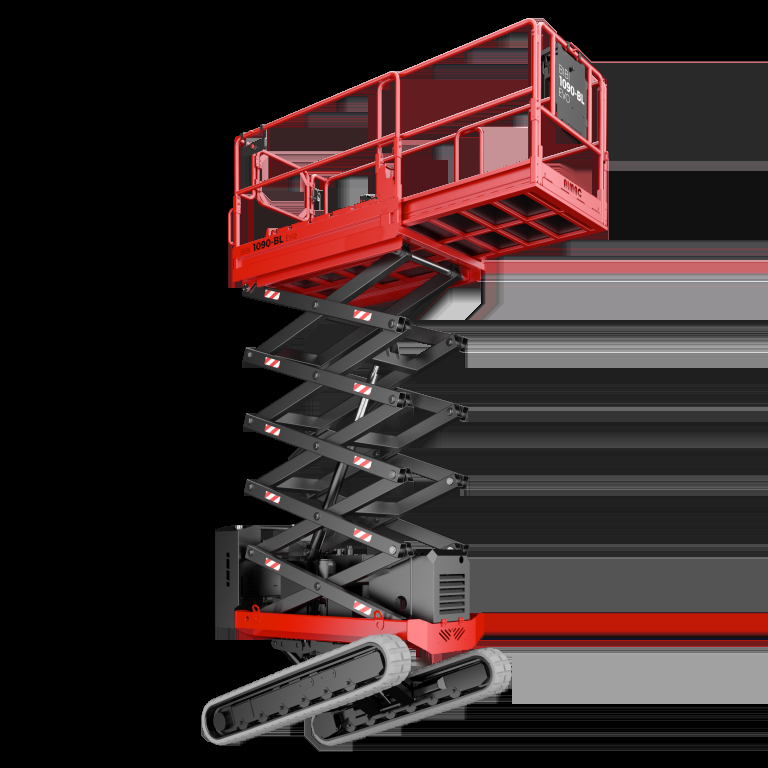
Athena 850BL Tracked Scissor Lift
- Working height
- 7.9 m
- Platform height
- 5.9 m
- Width
- 1.30
- Power
- Bi-energy (15 amp mains electric or onboard diesel)
- Terrain
- Tracked / self-levelling on tracks, drives while level
Why it may suit: 19ft tracked hybrid (bi-energy) self-levelling scissor lift, 7.9m working height, 250kg, bi-levelling crawler undercarriage for slopes and rough ground. Runs plugged in to 15…
Worth checking: Tracked repositioning is slower than wheeled. Electric running is tethered and needs a 15 amp supply on a lead, because there is no on-board battery: if a 15 amp outlet is not within reach of the work area the machine runs on its separate Kubota diesel engine instead, so confirm the power before an indoor or enclosed job. Confirm the surface rating before tracking over finished ground.
Matched on verified fields: Working height, Platform height, Width, Power, Terrain. Site access, ground conditions and dates still need checking against your job.
Scissor Lifts
Athena 870 BL EVO Tracked Scissor Lift
- Working height
- 7.9 m
- Platform height
- 5.9 m
- Width
- 1.30
- Power
- Bi-energy (15 amp mains electric or onboard diesel)
- Terrain
- Tracked / self-levelling on tracks, drives while level
Why it may suit: 19ft tracked hybrid (bi-energy) scissor lift with 7.9 m working height and 250 kg on a full 1.50 by 1.20 m basket. Levels on…
Worth checking: Tracked repositioning is slower than wheeled. Electric running is tethered and needs a 15 amp supply on a lead, because there is no on-board battery: if a 15 amp outlet is not within reach of the work area the machine runs on the Kubota diesel instead, so confirm the power before an indoor or enclosed job. Confirm the surface rating before tracking over finished ground.
Matched on verified fields: Working height, Platform height, Width, Power, Terrain. Site access, ground conditions and dates still need checking against your job.
Suitability is subject to site access, ground conditions and availability. We confirm the machine against your job before hire.
Consider a boom lift when the work requires horizontal outreach or positioning away from the base:
Boom lifts to compare
Boom Lifts
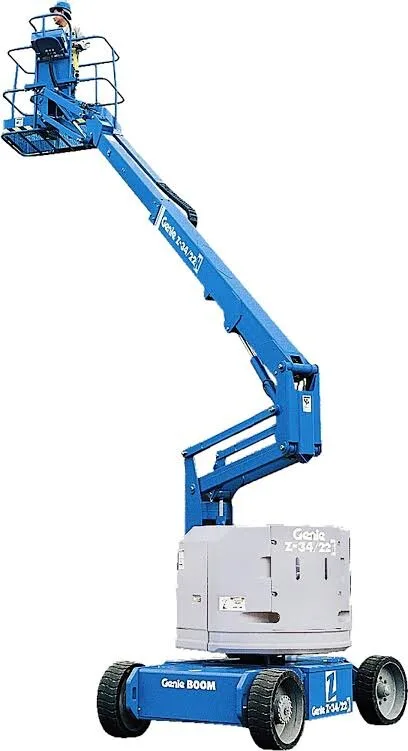
Genie Z-34/22 Articulating Boom Lift
- Working height
- 12.62 m
- Platform height
- 10.62 m
- Width
- 1.85 m
- Power
- Diesel
- Terrain
- Rough terrain
Why it may suit: 34ft diesel articulating boom lift, 12.62m working height, 6.78m outreach, 227kg, 45% gradeability on foam-filled tyres.
Worth checking: Diesel engine — outdoor use only. Needs firm site access.
Matched on verified fields: Working height, Platform height, Width, Power, Terrain. Site access, ground conditions and dates still need checking against your job.
Boom Lifts
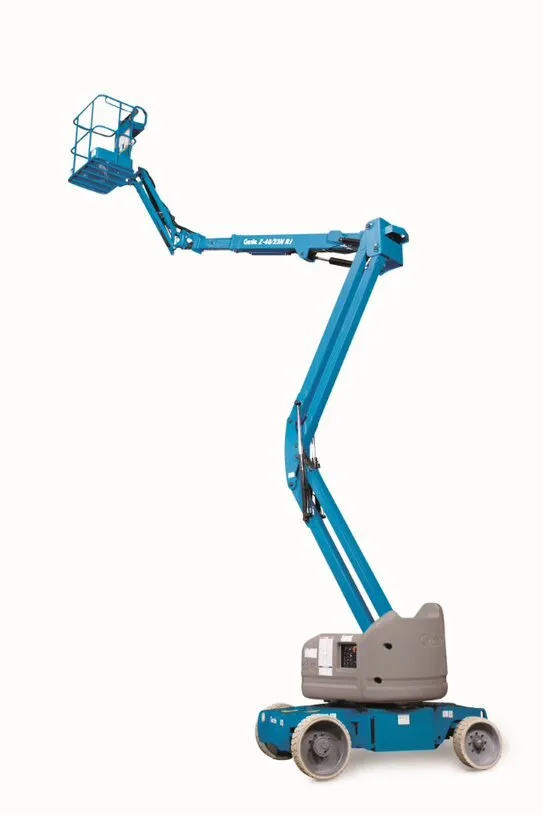
Genie Z-40/23N RJ Articulating Boom Lift
- Working height
- 14.32 m
- Platform height
- 12.32 m
- Width
- 1.50 m
- Power
- Electric
- Terrain
- Hard standing / firm ground
Why it may suit: 40ft electric articulating boom lift, 14.32m working height, 6.91m outreach, 227kg, 1.50m wide, battery powered, zero emissions.
Worth checking: Electric drive with 30% gradeability — firm, reasonably level ground. Confirm slab loading before taking it inside.
Matched on verified fields: Working height, Platform height, Width, Power, Terrain. Site access, ground conditions and dates still need checking against your job.
Suitability is subject to site access, ground conditions and availability. We confirm the machine against your job before hire.
Consider a vertical mast lift where compact access and modest outreach are required:
Fleet availability changes. Tell us the job and we will confirm what suits your site.
The wider selection method, across every machine family, is in choosing an EWP.
What to send Equip Hire for an accurate quote
- What the work is and the height of it
- Whether the machine can park directly under the work point
- The surface it will stand on, and whether it is indoors
- The narrowest access point, measured
- Dates and the suburb
FAQs
Is a boom lift harder to operate?
Boom lifts have more degrees of movement and, in NSW, a high risk work licence (WP class) applies to boom-type elevating work platforms where the boom length is 11 metres or more. All EWP use requires appropriate training and competency for the task under the NSW EWP code. Tell us who is operating and we will flag what applies to the specific machine; EWP licences in NSW has the detail.
Can I hire both for the same job?
Yes, and on jobs with mixed work it is often cheaper than forcing one machine to do everything. Quote both in one request.
What if I am still not sure?
Send photos of the work and the access with your quote request. It is usually obvious to us within a minute which type fits.
Get both types quoted against your job in one request.
Get a Hire Quote