Quick answer
For most warehouse maintenance the right machine is an electric scissor lift: no exhaust, non-marking tyres, a platform big enough for two people and their fittings, and a footprint that fits a standard aisle. Pick the size from the height of the fittings, then check three widths: the narrowest door or gate on the route, the clear aisle at the work position, and the turning space. Where the aisle is too tight or only one person needs to go up, a vertical mast lift is the better answer.
Quick answer: warehouse maintenance is recurring work in a building that is usually still operating: lights, sprinkler heads, detectors, racking inspections, signage, cameras, cabling and roller doors. For most of it an electric scissor lift sized to the fitting height is the machine, with a vertical mast lift for light single-person tasks in tight spots. Before booking, measure the fitting height, the narrowest point of the route in its normal working state, the floor you will drive on and where the machine will charge. Installation and fit-out planning is covered separately in scissor lift hire for warehouse fit-outs.
Routine maintenance around operations
Maintenance happens while stock moves. That needs a physical exclusion zone under and around the platform, agreed separation from forklift and pedestrian routes, and someone at ground level who knows the machine is up. Working above a live pick face is a traffic management problem before it is an access problem, so agree the work windows and aisle closures with the site first.
For a recurring program (monthly lamp changes, quarterly sprinkler or detector checks, annual racking inspections), plan the route once and reuse it: the same machine, the same aisles, the same charging point. Long term hire rates are lower than daily; tell us the pattern of the work and we will price it as a program.
Machines for warehouse maintenance
| Machine | Working height | Width | Platform load | Weight |
|---|---|---|---|---|
| JLG ES1932, 19ft electric | 7.8 m | 0.81 m | 230 kg (120 kg on extension) | 1,550 kg |
| LGMG S0607E II, 19ft electric | 7.8 m | 0.79 m | 230 kg (120 kg on extension) | 1,610 kg |
| Zoomlion ZS0808AC, 26ft narrow | 10.0 m indoors, 7.8 m outdoors | 0.81 m | 230 kg (113 kg on extension); 2 people indoors, 1 outdoors | 2,090 kg |
| LGMG S1212E-2, 40ft electric | 14.0 m indoors, 9.5 m outdoors | 1.19 m | 320 kg (120 kg on extension) | 2,940 kg |
Figures are from the manufacturer specification sheets on file, linked from each machine page. Browse all electric scissor lifts and narrow scissor lifts.
How high do I need to reach?
Measure to the fitting, not to the roof: the underside of the sprinkler pipe, the top of the racking beam, the light fitting itself. Then choose a machine whose working height covers it with a margin. Working height already includes about 2 m for a person standing on the platform; the number in the machine name is the platform height in feet. See working height versus platform height.
Verify floors, aisles and charging
Aisles and turning space
Three numbers decide whether a machine reaches the work:
- the narrowest door or gate on the route;
- the clear aisle width with the aisle in its normal state, allowing for pallets that overhang the racking line, stacked stock and parked pallet jacks;
- the turning space at each corner the machine must go round.
For turning, use the outside radius on the specification sheet: 1.7 m for the ES1932 and 2.1 m for the ZS0808AC (0.1 m inside). A racking upright at a corner stops more machines than door frames do.
Doors and overhead clearance
Measure the clear opening of each door, including the frame, closer and any hardware, and compare it with the machine width plus a working margin. Do not assume a personnel door is wide enough. Check height too: the ES1932 is 2.10 m with rails up and 1.99 m with rails folded, and the ZS0808AC is 2.40 m and 1.90 m. Under a mezzanine, in a goods lift or under a roller door that does not fully retract, the folded height is usually what decides it. Tell us the openings and we will confirm which machine clears them, or use the doorway access checker.
Floors
A ground floor slab in a purpose-built warehouse is the normal case. A mezzanine, a suspended floor, an older slab or a floor over a basement car park needs the engineer or the building documents, not a guess. The machines above weigh 1,550 to 2,940 kg, carried on four small contact patches, so point loading matters more than the total. Send us the floor’s stated load limit with the machine you are considering. See machine weight and floor loading.
Our electric scissor lifts run on non-marking tyres and produce no exhaust, which suits occupied warehouses and food or pharmaceutical facilities. If the floor has a coating, epoxy or special finish, tell us so we can confirm it.
Charging
These machines charge from a standard 240 V outlet through an onboard charger. Runtime depends on how much the machine drives and lifts: a day of travelling between aisles uses more charge than a day parked at one fitting. The ES1932 runs four 6 V 220 Ah batteries; the S0607E II a 24 V 225 Ah pack. Plan where the lead goes before delivery, because in a large warehouse the nearest outlet is often far from the work. For second shifts, charge during breaks and shift changes or hire a second machine so one is always charging. See charging an electric scissor lift on site.
What can go up on the platform?
The rated load covers people, tools and materials together: 230 to 320 kg on the machines above, with a lower limit on each extension deck. Some machines also carry fewer people outdoors than indoors. Add up the actual weights of the people and the kit for the task rather than assuming a headcount, and keep materials on the main deck if the extension is near its limit.
When is a vertical mast lift the better machine?
When one person goes up with a light load and the space is tight. Check the actual model, because mast lifts vary: some are not narrower than a narrow scissor lift. For example, our LGMG M0810JE mast lift is 1 m wide. Where two people work off the deck or fittings travel with them, a scissor lift is usually the machine. Browse vertical mast lifts or use the comparison page, and see vertical mast vs scissor lift.
Shutdowns and larger programs
For a shutdown or a project with several machines, see hiring two scissor lifts for a warehouse fit-out. We confirm machines, delivery sequence and charging before anything leaves the yard, because two machines arriving at a site with one accessible outlet is a problem that only shows on the day.
Next step
Measure the fitting height, the narrowest opening and the clear aisle, then send them with a quote request, including the task and how often it recurs. If you are still deciding on the machine class, start at the electric scissor lift guide.
Machines for indoor maintenance work
Indoor suitability here comes from the machine record, not from an assumption about the power type.
Electric Scissor Lifts
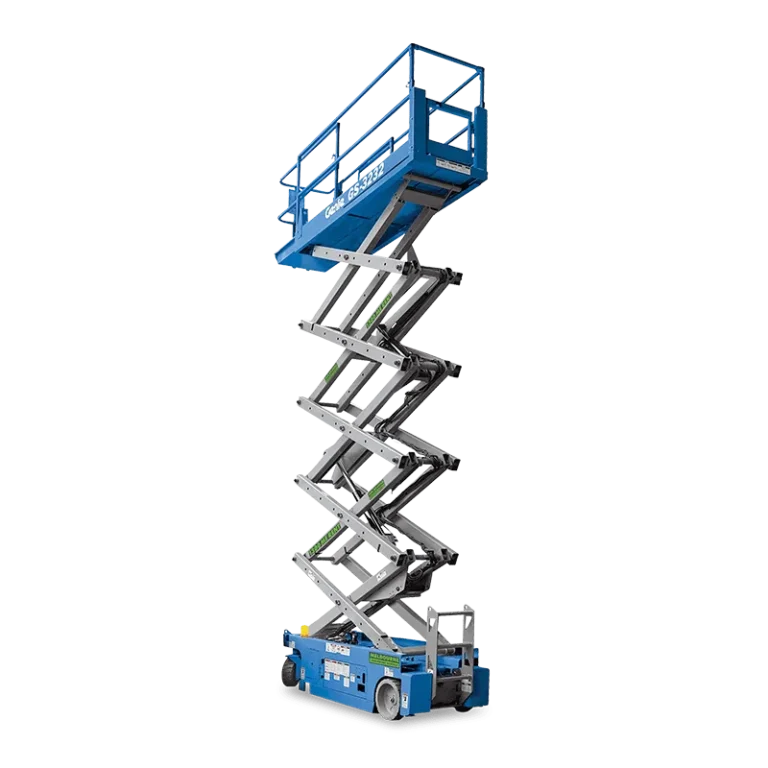
Genie GS-3232 Narrow Electric Scissor Lift
- Working height
- 11.78 m
- Platform height
- 9.78 m
- Width
- 0.82 m
- Power
- Electric
- Terrain
- Indoor / hard standing
Why it may suit: 32ft narrow electric scissor lift, 11.78m working height indoors, 227kg, 0.82m wide, the tallest machine that still fits a doorway.
Worth checking: IMPORTANT — outdoor rating is much lower than indoor: 5.49m platform height outdoors versus 9.78m indoors. Non-marking tyres, hard standing only.
Matched on verified fields: Working height, Platform height, Width, Power, Terrain. Site access, ground conditions and dates still need checking against your job.
Electric Scissor Lifts
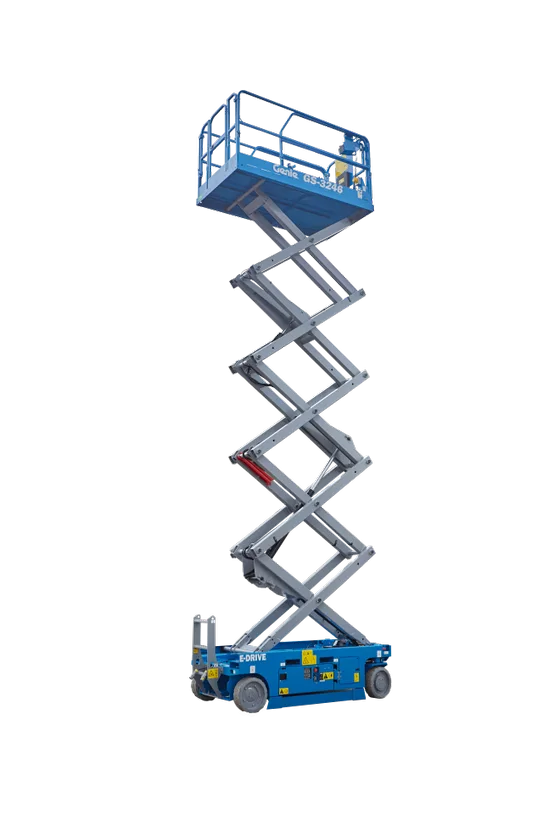
Genie GS-3246 Electric Scissor Lift
- Working height
- 11.75 m
- Platform height
- 9.75 m
- Width
- 1.17 m
- Power
- Electric
- Terrain
- Indoor / hard standing
Why it may suit: 32ft electric scissor lift, 11.75m working height, 318kg, the workhorse electric deck for high indoor access.
Worth checking: Outdoor occupancy is one person. Non-marking tyres and 25% gradeability — hard standing only.
Matched on verified fields: Working height, Platform height, Width, Power, Terrain. Site access, ground conditions and dates still need checking against your job.
Electric Scissor Lifts
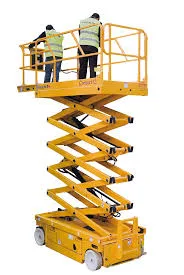
Haulotte Compact 12 Electric Scissor Lift
- Working height
- 11.98 m
- Platform height
- 9.98 m
- Width
- 1.2 m
- Power
- Electric
- Terrain
- Indoor / hard standing
Why it may suit: 32ft electric scissor lift, 11.98m working height, 300kg, 1.2m wide, tall electric reach with a 3.23m extended deck.
Worth checking: 23% gradeability and non-marking tyres — firm, level hard standing. Confirm floor loading at height.
Matched on verified fields: Working height, Platform height, Width, Power, Terrain. Site access, ground conditions and dates still need checking against your job.
Suitability is subject to site access, ground conditions and availability. We confirm the machine against your job before hire.
We deliver to warehouses across Western Sydney, Blacktown, Marsden Park and the rest of Sydney from Berkshire Park.