
Quick answer: Choose a rough-terrain scissor lift by checking four things in order: the ground it must travel and work on, the working height you need, the width and weight your site access can take, and whether outriggers or levelling are required where you will elevate. A diesel rough-terrain scissor suits unsealed, uneven or sloping site travel that would stop an electric slab machine, but it is wider, heavier and not suited to finished indoor floors.
Describe the ground and the height and we will confirm what suits.
Help me chooseStart with the ground, not the height
Most rough-terrain hires that go wrong are ground problems, not height problems. Before comparing machines, walk the route the machine will travel and the area where it will elevate. Note soft spots after rain, loose fill, trenches, kerbs and the steepest slope on the route.
A rough-terrain scissor can travel ground an electric machine cannot, but every machine still has strict limits for elevating on slopes. Elevation is generally only permitted within the manufacturer’s chassis levelness limits, which are much tighter than the travel gradeability figure. The two numbers are often confused.
Travel gradeability vs elevation limits
Gradeability describes the slope a machine can drive up in its stowed position. It says nothing about working on that slope. If your work position is on a grade, plan for levelling: a machine with outriggers or an area cut level before the machine arrives.
What to compare between rough-terrain models
| Factor | Why it matters | What to check |
|---|---|---|
| Working height | Where your hands can work | Compare working height to working height, not to platform height |
| Machine width | Gates, between structures | Site access widths against the spec sheet |
| Machine weight | Ground bearing, transport | Soft ground, trench proximity, delivery truck access |
| Tyre type | Traction and surface marking | Foam-filled rough-terrain tyres mark finished surfaces |
| Platform capacity | People plus tools plus materials | Add everything up before assuming two people fit |
| Power type | Fumes and noise | Diesel is for outdoors; do not plan indoor use |
Practical limitations
- Rough-terrain scissors are wide. If part of the job runs through a standard doorway, you need a second, narrower machine for that part.
- They are heavy. Confirm the delivery truck can reach the site and the ground can take the machine, especially near excavations and services.
- Wet weather changes ground. Ground that took the machine on delivery day may not take it a week later.
- Diesel exhaust and noise rule out enclosed spaces.
Popular Hire Options for This Type of Work
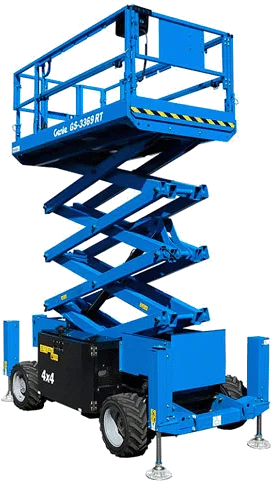
Diesel Rough Terrain Scissor Lifts
Genie GS-3369 RT Rough Terrain Scissor Lift
- Working height
- 11.75 m
- Platform height
- 9.75 m
- Width
- 1.75 m
- Power
- Diesel
- Terrain
- Rough terrain / 4WD
Why it may suit: 32ft diesel rough-terrain scissor lift, 11.75m working height, 454kg and a 1.52m extension deck: 4WD, drivable at full height.
Worth checking: Diesel engine — outdoor use only. Outdoor platform occupancy limited to two people in CE/AUS markets. 1.75m wide, 3.76m long stowed — plan site access.
Matched on verified fields: Working height, Platform height, Width, Power, Terrain. Site access, ground conditions and dates still need checking against your job.
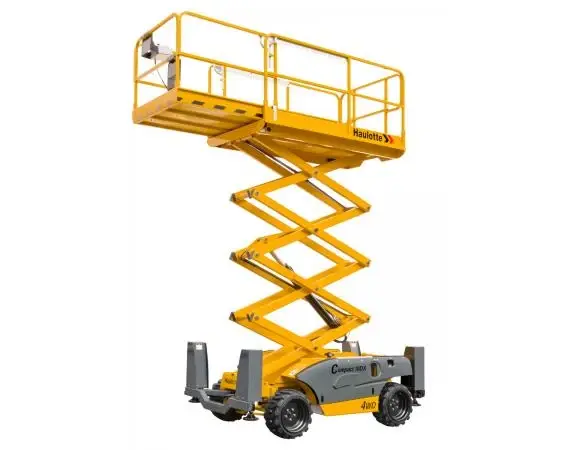
Diesel Rough Terrain Scissor Lifts
Haulotte Compact 12 DX Rough Terrain Scissor Lift
- Working height
- 12.06 m
- Platform height
- 10.06 m
- Power
- Diesel
- Terrain
- Rough terrain / self-levelling
Why it may suit: 32ft diesel rough-terrain self-levelling scissor lift, 12.06m working height, 450kg: 4WD, 40% gradeability and four outriggers.
Worth checking: Diesel engine — outdoor use only. Outriggers must be set before elevating on uneven ground.
Matched on verified fields: Working height, Platform height, Power, Terrain. Site access, ground conditions and dates still need checking against your job.
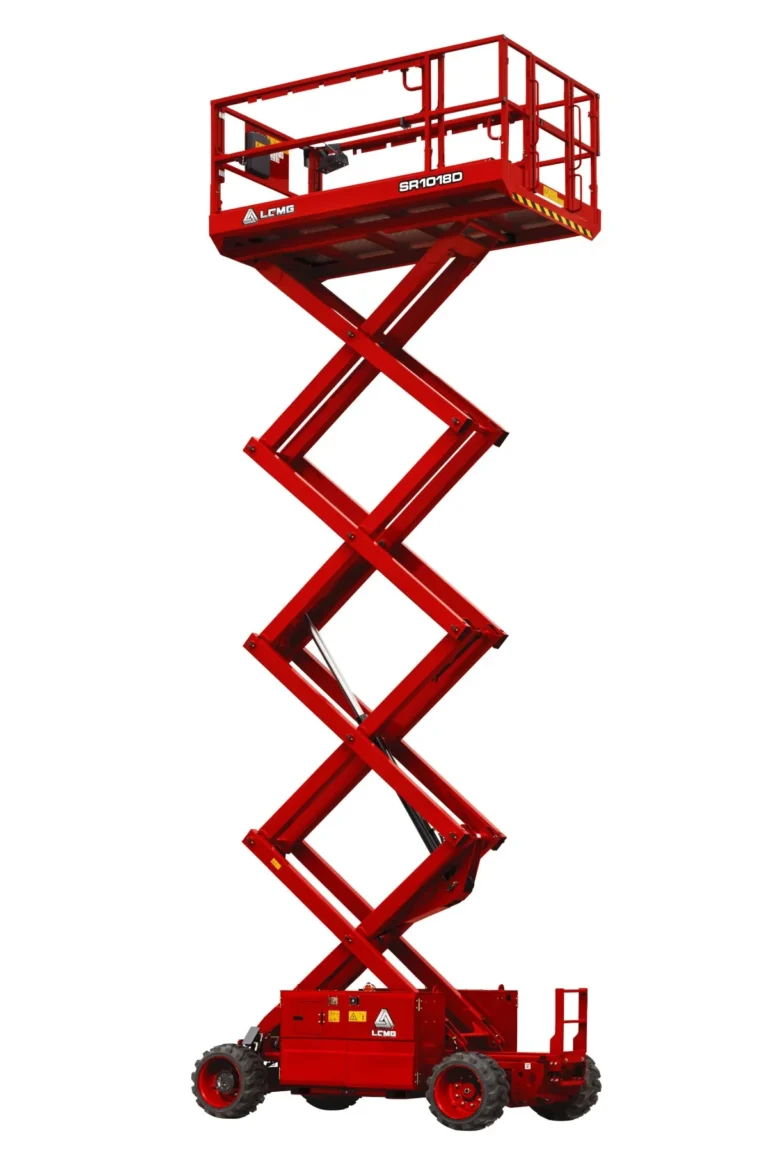
Diesel Rough Terrain Scissor Lifts
LGMG SR1018D Rough Terrain Scissor Lift
- Working height
- 11.7 m
- Platform height
- 9.7 m
- Width
- 1.79 m
- Power
- Diesel
- Terrain
- Rough terrain / 4x4
Why it may suit: 33ft diesel rough-terrain scissor lift, 11.7m working height, 454kg capacity, 4x4 with auto-levelling outriggers: for outdoor sites and unsealed ground.
Worth checking: Diesel — outdoor use only. Large 4.3t machine; needs site access and firm-enough ground.
Matched on verified fields: Working height, Platform height, Width, Power, Terrain. Site access, ground conditions and dates still need checking against your job.
Suitability is subject to site access, ground conditions and availability. We confirm the machine against your job before hire.
What to include in your quote request
- The working height you need, and how you measured it
- Ground type on the travel route and at the work position
- The steepest slope the machine must cross
- Narrowest access point width
- Required dates so the team can check the current fleet